
WMS vs WCS vs WES: Understanding the Software Behind Warehouse Automation
Introduction
Modern warehouse automation relies not only on physical equipment such as automated storage systems, robotics, and conveyor systems, but also on intelligent software that coordinates operations. Three key software layers commonly used in automated warehouses are WMS (Warehouse Management System), WCS (Warehouse Control System), and WES (Warehouse Execution System).
Although these systems are often mentioned together, they serve different roles within warehouse operations. Understanding the differences between WMS, WCS, and WES helps businesses design more efficient and scalable warehouse automation solutions.
What is a Warehouse Management System (WMS)?
A Warehouse Management System (WMS) is the core software platform responsible for managing inventory, orders, and warehouse operations at a strategic level.
The WMS tracks inventory locations, manages inbound and outbound orders, controls stock accuracy, and provides visibility into warehouse activities. It communicates with enterprise systems such as ERP or order management systems to coordinate inventory movement and order fulfillment.
Typical functions of a WMS include:
- Inventory tracking and stock control
- Receiving and put-away management
- Order picking and packing coordination
- Inventory reporting and analytics
The WMS focuses primarily on managing warehouse data and operational processes rather than controlling physical automation equipment.
What is a Warehouse Control System (WCS)?
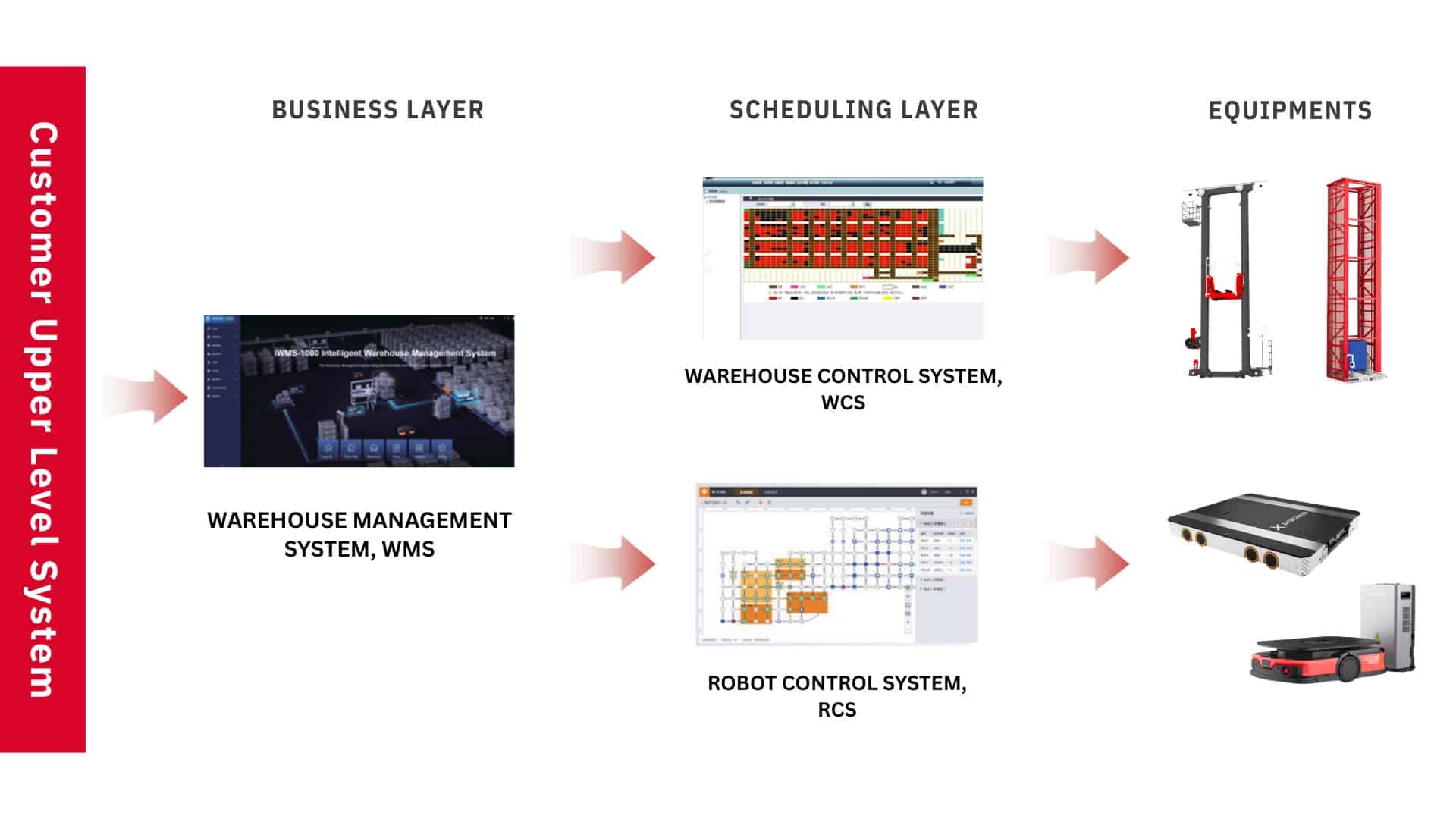
A Warehouse Control System (WCS) operates at the equipment control level. It directly communicates with automated hardware such as conveyors, sorters, automated storage systems, and shuttle systems.
The WCS translates high-level instructions from the WMS into machine-level commands that control how equipment moves goods within the warehouse.
Key functions of a WCS include:
- Real-time equipment control
- Routing decisions for conveyors and sortation systems
- Communication with PLCs and automation controllers
- Monitoring equipment performance and system status
The WCS ensures that automation equipment operates smoothly and safely during daily warehouse operations.
What is a Warehouse Execution System (WES)?
A Warehouse Execution System (WES) acts as an intelligent coordination layer between the WMS and WCS. It focuses on optimizing operational flow and managing tasks across both software and automation equipment.
Unlike a traditional WCS that focuses only on equipment control, a WES manages workflow execution and dynamically balances tasks across the warehouse.
Typical WES capabilities include:
- Task orchestration across automated systems
- Workload balancing and system optimization
- Dynamic order prioritization
- Real-time decision making for warehouse flow
WES platforms are increasingly used in highly automated warehouses where multiple automation technologies must operate together efficiently.
How WMS, WCS, and WES Work Together
In a modern automated warehouse, these three systems work together in a layered architecture.
The WMS manages inventory data and order information. The WES coordinates workflow and operational logic. The WCS communicates directly with automation equipment to execute physical tasks.
This layered structure allows warehouses to achieve better operational visibility, automation efficiency, and system scalability.
Conclusion
Understanding the roles of WMS, WCS, and WES is essential when designing or upgrading an automated warehouse. Each system plays a unique role in managing data, controlling equipment, and optimizing operational flow.
By implementing the right combination of warehouse management software and automation control systems, companies can improve warehouse productivity, increase accuracy, and support long-term automation growth.